How a Concert Programme Shapes What You Hear
Concert programme design shapes how music speaks across an evening. See how order, contrast and pacing help you hear connections between works.
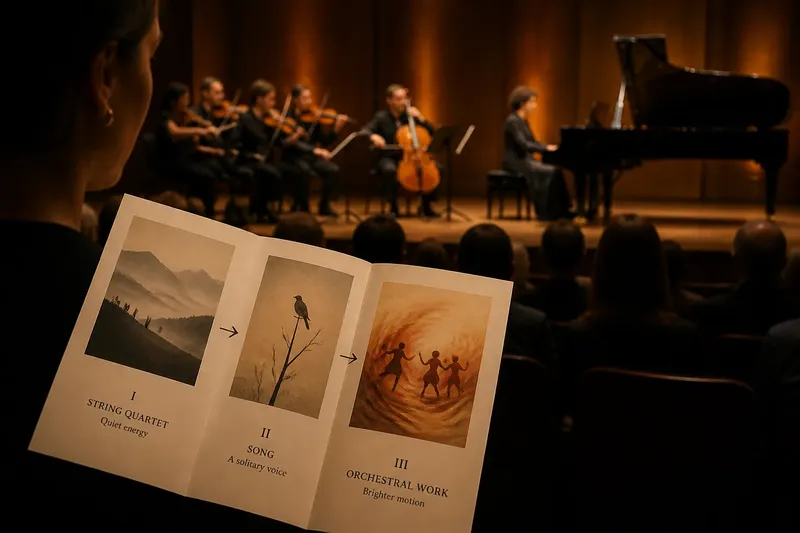
You open a concert programme and see a quiet song placed between two orchestral works. That order is not just a list: concert programme design can shape the energy of an evening, direct attention and bring unexpected connections into focus.
A programme works a little like a route through a gallery. The works remain themselves, but their neighbours, sequence and pauses affect what stands out. Reading those choices can make a live performance feel more coherent, even when the pieces come from different periods or traditions.
Why does the order of pieces matter?
The opening work sets the room’s first listening conditions. A concise, vivid piece may draw attention quickly; a slower opening can invite a more settled kind of concentration. Neither approach is inherently better. The question is what sort of welcome the programme offers.
Later pieces are heard in the light of what came before. A change from a full orchestra to a solo instrument can make small details suddenly prominent. A shift in mood can refresh attention, while works with related sounds or ideas may seem to belong to a larger conversation.
Concert planners also consider practical transitions. Instrument changes, performer entrances and stage rearrangements take time, and a sequence can make those changes feel natural rather than disruptive. The programme order is therefore both an artistic choice and a way of shaping the room’s rhythm.
How do contrast and connection work together?
A compelling programme often balances difference with some thread of connection. Contrast might come from scale, sound, mood or musical language: a solo voice beside a large ensemble, for instance, changes the texture of listening. A connection might be a shared theme, a common historical period or a composer’s influence on another.
That thread need not be announced. If a programme places two works with related rhythms far apart, you may notice the resemblance yourself. Conversely, a spoken introduction can point out a link that is easy to miss on first hearing, giving the audience a useful listening clue without dictating a single interpretation.
Say you find an imagined programme that pairs a short work for strings with a later piece for a larger ensemble, both built around restless repeated figures. The first gives you a clear sound to remember; when the second expands that motion, the connection may become audible. The sequence offers a route into the later work without requiring prior knowledge.
What can a programme note tell you?
Programme notes can explain context, identify a musical idea or describe why works appear together. They are most useful as invitations to listen, not as instructions for what you must hear. A brief note about a recurring rhythm, unusual instrument or historical setting gives you something concrete to notice.
Read the note before the performance if you enjoy having a point of focus, or save it for the interval or journey home if you prefer an unprompted first impression. For unfamiliar names and titles, a pronunciation guide or a short description may be more helpful than a long account of a composer’s life.
Do not feel obliged to read every paragraph or memorise the programme. A note is not homework, and missing a reference will not prevent you from responding to the music. Follow the details that sharpen your curiosity and leave the rest alone.
How can you read concert programme design?
Why might a concert begin with a short work?
A brief opening can establish the performers’ sound and settle attention before a larger piece. It can also provide a sharp point of contrast if the next work is more expansive.
What does an interval do to the programme’s shape?
An interval divides the listening into distinct stretches and gives performers time for a change of forces or setup. It can also make the second half feel like a fresh beginning rather than a continuation.
Why are works from different periods paired?
A pairing can reveal how musical ideas persist or change across time. Listen for a shared feature such as a dance rhythm, a particular instrumental colour or a similar sense of motion.
Does the printed order always match the performance order?
Performers may adjust the order for practical or artistic reasons, and occasional changes can happen on the day. Check any announcement or updated programme at the venue if a particular sequence matters to you.
What should you notice as the concert unfolds?
You do not need to analyse every passage. A few simple observations can help you hear how the programme’s design works:
- Opening texture: Notice whether the first sound is sparse or full; if it feels intimate, listen for how a later ensemble changes that scale, and if it begins densely, attend to any moment when the texture clears.
- Instrumental contrast: Look for a change in the performers or instruments; if a soloist follows a group, listen for details now exposed, and if the same forces return, notice what their new material changes.
- Mood shifts: Observe where the atmosphere changes; if the transition feels abrupt, listen for a shared rhythm or gesture, and if it feels gradual, follow the feature that carries you between works.
- Recurring patterns: Listen for a rhythm, melodic shape or colour that returns; if you recognise it later, compare how it has changed, and if it does not return, treat its first appearance as a local feature rather than searching for it.
- Spoken introductions: Note any listening clue the host offers; if it points to a specific detail, listen for that detail, and if it gives broad context, keep it in mind without treating it as the only valid interpretation.
- Pauses and transitions: Notice how the performers move between works; if a pause creates a clear reset, let the next piece stand on its own, and if the music continues without much separation, listen for a link in mood or sound.
Concert programme design can be heard most clearly by noticing what changes and what carries across the evening. Say you attend an imagined recital where a singer performs a spare folk song, followed by a piano piece with a similarly winding melody, then a brighter song. First, you notice the exposed voice and its unhurried line; next, you compare the piano’s melody with that shape; finally, the brighter song shifts the mood. The sequence gives you a possible connection and a clear contrast, without requiring you to decide that the works tell one fixed story.
Before the next performance, glance at the order and choose one feature to follow: a change in scale, a recurring rhythm or a shift in mood. That small point of attention is often enough to make the programme’s design audible while leaving plenty of room for surprise.