Standing Ovations Do Not Measure a Performance
Standing ovations reflect venue custom and group momentum as well as musical response. Learn how to read the room without mistaking applause for a verdict.
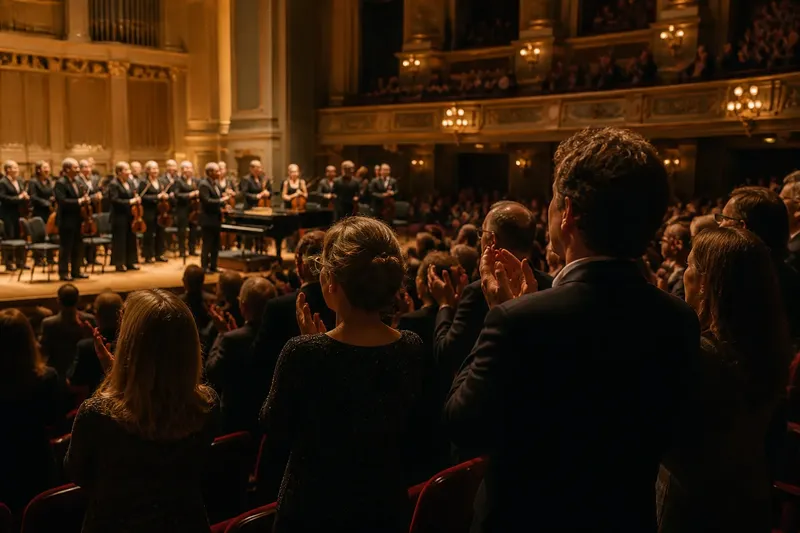
The final chord fades, applause gathers, and a row of people rises before you have decided what you think. At a concert, a standing ovation can look like a verdict delivered by the whole room. It is better read as a public gesture shaped by music, custom and the people nearby.
That distinction helps if you are deciding whether to stand or wondering why one audience rose while another stayed seated. The gesture tells you what some people did; it cannot explain, on its own, what each person felt.
Why does standing spread through a concert hall?
In some venues, rising has become a familiar way to express strong approval. Once several people stand, the gesture also becomes a signal to those around them. Someone may join because they are moved, because they want a clearer view, or because remaining seated suddenly feels conspicuous.
That social influence does not make the response insincere. People often look to their neighbours when a public moment has no single rule. Applause continues, a row rises, and standing can seem like the room’s natural next move—even for a listener whose own reaction is quieter.
You can decide based on your own response. If you stay seated, applauding warmly is a courteous way to acknowledge the performers. If you stand, the gesture need not mean that every part of the concert struck you equally.
Why do some performances prompt an ovation?
The response is shaped by more than the playing. Venue etiquette, the event’s character, audience expectations and the ending all influence what people do. A celebratory occasion may invite a more demonstrative response than a restrained recital, even if listeners were equally absorbed.
Programme design can shape the moment, too. A forceful final movement may leave the audience ready to applaud at once. A soft ending or reflective closing piece can produce a pause while the room takes in what it has heard. Silence in that moment is not automatically a sign of disappointment.
Consider the setting alongside the response. A familiar custom, an upbeat occasion or a dramatic ending may help explain why people stood, but none of these clues settles the quality of the performance.
What can a standing ovation tell you?
It shows that some audience members chose a conspicuous way to applaud. Their reasons remain private: one person may be responding to a solo, another to the whole evening, and another to a custom associated with enthusiastic approval.
The gesture also bundles different reactions together. It cannot tell you whether people admired the interpretation, the musicians’ command, the programme or the occasion. Nor does a seated audience prove that a performance fell short. People may be reserved, tired, unable to stand comfortably or accustomed to expressing appreciation in other ways.
For a careful description, say that many people stood or that the response looked enthusiastic. That reports what was visible without claiming to know what every listener felt or what the performance objectively deserved.
What should you do when the crowd rises?
Applause can begin while you are still taking in the ending. Then someone in front stands and blocks your view. You may feel caught between wanting to see the stage and not wanting to copy a response you have not chosen.
There is no single correct posture. If standing is comfortable and feels right, join in. If you would rather stay seated, applaud from your seat. You can also pause while the first movement of the crowd passes, then choose without rushing. If you stand for a clearer view, that choice need not be a judgement on the music.
Say you are at a concert where the closing piece leaves you impressed but not overwhelmed. People in your row begin to rise. You decide that you want to acknowledge the performers, so you stand and applaud; to yourself, the gesture means “thank you”, not “every element was beyond criticism”. You have joined the audience without surrendering your own judgement.
What questions help you read a standing ovation?
Does a standing ovation mean everyone loved the performance?
No. It records a visible action by some people in the room, not a private opinion shared by everyone. Those who stand may also be responding to different parts of the event.
Is it rude to remain seated?
Usually, staying seated while applauding is a civil response. If a particular concert has stated customs, follow the venue’s guidance without assuming that a different posture is disrespectful.
Can an ovation tell me whether the music was performed well?
It can suggest that some listeners felt strongly enough to make a conspicuous gesture, but it cannot separate musical quality from occasion, expectation or group momentum. Your own listening and informed discussion offer a fuller basis for judgement.
Should I stand if I cannot see the stage?
You may stand if you want to, but you are not obliged to match the row in front of you. If mobility or access affects your choice, there is no need to explain it to other concertgoers.
What is not worth decoding?
Counting how quickly people rose, comparing applause from unrelated concerts or guessing what the person beside you felt rarely adds much. Those details encourage certainty where the room offers only clues. A programme note or thoughtful conversation afterwards may tell you more about the artistic choices than the height of the audience.
A standing ovation is part of concert-going culture, not a measuring instrument. Read it as a public custom and a moment of shared energy, then let your own response remain yours. To interpret a standing ovation sensibly, begin with its clearest evidence: the crowd has shown what it did, not exactly why each person did it.