Why a Recital Makes One Performer the Centre of Attention
Why a recital makes one performer the centre of attention, and how programme order, silence and stage layout help listeners follow the music.
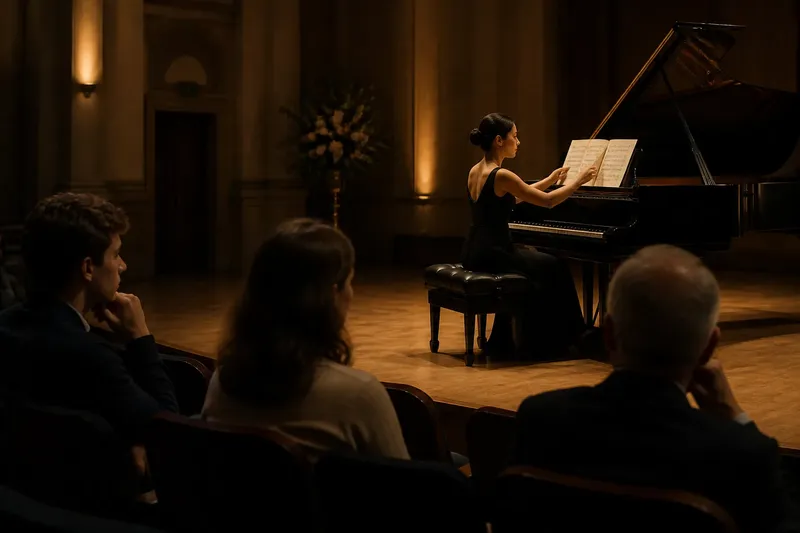
A pianist lifts her hands from the keyboard, waits for the last sound to fade, then turns a page before beginning again. At a recital, that small pause belongs to the performer as much as the music does. Why a recital makes one performer the centre of attention comes down to the way one person carries melody, accompaniment and transitions across an entire programme.
Imagine a clearly hypothetical evening in a modest hall: Mara, a pianist, opens with a quiet piece, follows it with a group of short works, then plays a sonata after the interval. A friend who rarely attends classical concerts, a student and a devoted listener sit in the audience. They have different knowledge, but the same performer gives them a shared point of focus.
How does a solo format focus attention?
An ensemble spreads attention among players. A listener might follow the melody, watch a woodwind player answer it, or look towards the conductor. In a piano recital, one performer makes those musical roles audible through a single instrument. The ear can follow a phrase as it moves from a singing upper line to a weightier chord, without having to choose which player to watch.
This concentration does not require constant scrutiny of the pianist. A lifted wrist or a change in posture can hint at a transition, but the sound remains the main event. The format simply makes the performer’s choices unusually easy to connect with what the audience hears.
How does programme order shape a recital?
Mara’s imagined sequence gives the audience several ways into the piano’s sound. A quiet opening lets listeners settle into the room’s particular response. Short contrasting works then reset the ear, while the longer sonata offers an extended musical argument after the interval.
A programme need not tell a story to create a sense of direction. Placing a delicate melody beside a full chordal passage makes differences in touch and texture easier to hear. A short work can offer a fresh starting point; a longer one gives listeners time to notice an idea returning or changing.
Programme notes are most useful when they supply context without turning listening into a scavenger hunt. A note might identify a musical form or explain an unfamiliar term. If it lists details as things the audience must detect, set it aside and let the performance lead.
What role do silence and audience customs play?
The pause before the first note gives the room time to settle. Rests within a piece can make an entrance feel exposed, while the quiet after a final chord may leave listeners wondering whether the work has ended. When the ending is unclear, waiting for the pianist to lower her hands or acknowledge the audience helps everyone respond together.
Between works, the performer may turn a page, adjust the bench or take a moment before starting again. A small rustle is ordinary; conversation during a quiet passage can make an exposed line harder to hear. There is no need to hold perfectly still: turn programme pages between pieces and settle into a comfortable position.
It is not worth trying to identify every gesture or enforce silence over every tiny movement. The useful distinction is between an unavoidable sound and a sustained distraction. Listening customs should help the music carry across the room, not make the audience anxious about moving.
What can you listen for at a recital?
How can I follow a piece without knowing its form?
Notice changes in pace, register, volume or texture, then listen for a sound that returns. These audible landmarks can help you follow a longer work without naming its sections.
Why does the performer pause before starting?
The pause gives the room time to settle and lets the performer gather attention. It can also shape the mood, so a short wait does not necessarily mean anything has gone wrong.
When should I applaud between pieces?
Check the programme to see whether several movements belong to one continuous work, and watch for the performer’s cue. If the ending is ambiguous, waiting briefly for an acknowledgement is a considerate way to read the moment.
What if I lose concentration during a long work?
Return to one audible feature, such as the melody or a recurring rhythm. There is no need to reconstruct what you missed; the next clear change gives your attention a fresh starting point.
How does the hall affect what you hear?
A recital places the relationship between one instrument and one room in plain view. A piano’s softer details may seem especially present in a quiet space, while a bright, lively acoustic can make notes linger. Seat position also affects sightlines: a clear view of the keyboard may help you connect a gesture with a change in sound, but looking at the pianist is optional.
In Mara’s invented evening, the student initially watches the keyboard, then turns attention to the sound as the sonata grows denser. The friend notices the contrast between a spare opening and a broad chordal passage; the devoted listener recognises a returning phrase. Their observations differ, but each follows a thread made clear by the solo format.
What does one performer’s presence change?
By the final chord, the three imagined listeners have followed different paths through the same programme. The student has noticed a returning idea, the occasional concertgoer has heard the piano shift between melody and accompaniment, and the devoted listener has recognised familiar details. The format concentrates attention without prescribing what any of them must think.
If you are choosing a recital, look at the programme to see whether its sequence offers contrasting works or a longer piece that interests you. At the hall, a seat with a comfortable view of the performer can make gestures easier to follow, though the sound alone is enough. A recital’s defining feature is not a demand for expertise; it is the clear, unfolding trail of decisions made by one performer.